Task 1:Elements of the Bloody Chamber
Task
2: Angela Carter Research
Task 3: Charles Perrault and the Brothers
Grimm Fairy Tales Research
Task 4: Baudelaire Research
Task
5: Marquis De Sade Research
Task
6: Inter-textual References Research
Task
7: Defining Terminology
Task 8 : Basic Questions
Task 9 : Developed Questions
Task 10: Complex Questions
Task 11: Magical Realism Research
Task 1: Research the meaning of the following
words used to describe the Bloody Chamber
Leonine: (Free Dictionary)
'a type of English verse'
However there are also other
references mentioned which show 'Leonine' as a remark
given towards something or someone with the resemblance of a
lion or particular features of a lion. This is a feature found in the Marquis
(York Notes) ; “Carter places her characters in a mating game: the
'exquisite tact'' of his courtship of the girl is linked to the attentiveness
of a lion stalking his prey. The explicit reference to his 'dark mane' is the
first of many allusions to his bestial qualities". Quotes involving the mane:
"I could see the dark, leonine shape of his head" our narrator also more obviously relates this term.
"His curling mane was disordered, as if he had run his hands through it in his distraction".
Fugue: (Google Search definition)
1(Music): a contrapuntal
composition in which a short melody or phrase (the subject) is introduced by
one part and successively taken up by others and developed by interweaving the
parts.
2 (Psychiatry) a loss of awareness
of one's identity, often coupled with flight from one's usual environment,
associated with certain forms of hysteria and epilepsy.
Rococo: (Google Search definition)
In terms of an adjective : denoting
furniture or architecture characterized by an elaborately ornamental late
baroque style of decoration prevalent in 18th-century continental Europe, with
asymmetrical patterns involving motifs and scroll-work.
For the noun
use : style of art, decoration, or architecture.
Minimalist: Someone who associates
themselves with minimal change or reform usually described in political
matters. However being a minimalist may also link to lacking style, design or a
persona.
Chamber Music: A particular form of Classical
music composed for a small number of instruments . Due to its intimate nature
it can sometimes be described as 'the music of friends' due to the close
intimacy in which it is played.
Florid:
1. Having a red of flushed
complexion
2. Excessively intricate or
elaborate
3. Disease in manifestations
occurring in a fully developed form.
“The short story is not minimalist, it is rococo. I feel in absolute control. It is like writing chamber music rather than symphonies."- Angela Carter 1980 Interview
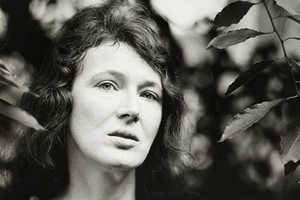
 Task 2: Research Angela Carter
a.) During years was she
alive?
Angle Carter was born on the 7th of
May 1940, and died on the 16th of February 1992.
b.) Where has she lived?
Carter was born in London during
WW2 and was evacuated away to Yorkshire in response. After High School she studied
English Literature at the University of Bristol.
c.) How is Carter linked to Jane Eyre?
At the time just before her death, Carter had started work on
a sequel to Charlotte Brontë's Jane Eyre based on the later life of Jane's
stepdaughter, Adèle Varens; unfortunately only a synopsis survived.
d.) What genres has she
written in?
Gothic fiction , Magic Realism ,
Short story sequence, postmodernist eclecticism, violence, and eroticism,
fantasy...
e.) In a list of 50 great
writers since 1945 , where did The Times rank Carter?
Angela Carter was placed 10th in
the 50 greatest writers since WW2 by The Times.
f.)
Name some of Carter's influences
Carter was
heavily influenced by Charles Perrault especially his collection of fairy tales
'Histories ou Contes du Temps
passé' published in 1697
well before her existence. The themes of
The
Bloody Chamber and Other Stories are
influenced by Marquis de Sade particularly
Justine , a sexually violent
writing. Isak Dinesen's
'Seven
Gothic Tales' is also claimed to be a precursor in Carter's writing
format. Angela Carter said herself that Anne's Rice
'The Vampire Chronicles' influenced her writing
'The Lady of the House of Love'.

Task 3: Research Charles Perrault and the Brothers Grimm Fairy Tales
a.)During what
years was Perrault alive?
January 12 1628 -
May 16 1703
b.)What is
Perrault famous for inventing?
It is widely
claimed that Perrault laid the foundations for the fairy-tale genre.
c.)What was
his most famous book called?
Charles Perrault
wrote many famous tales including Red
Riding Hood , Cinderella , Puss in Boots , The Sleeping Beauty In the Wood
and of course Bluebeard all under the Tales of Mother Goose
d.)When and
where was this published?
1695-1697 . The first public appearance was made In Worcester , Massachusetts.
e.)What did he
use as the basis for his tales?
He actually didn't write them from scratch but based
them on the old fables and stories based on folk motifs. We should know all his
writings, including fairy tales were intended for intellectuals and nobility.
Although his views could be considered as reactionary, they were very liberal
for 17th century.
f.)How many
tales did Perrault publish within this book?
Eight tales were
written by Perrault;
Cinderella
, Red Riding Hood, Sleeping Beauty In the Wood , Bluebeard, Puss in Boots ,The
Fairies , Ricky of the tuft , Little Thumb.
g.)When and where were the Brothers Grimm Fairy
Tales published?
1812 Germany
 h.)Where did the Brothers Grimm Fairy Tales draw
their influence from?
h.)Where did the Brothers Grimm Fairy Tales draw
their influence from?
"At Marburg they came under the influence of
Clemens Brentano, who awakened in both a love of folk poetry, and Friedrich
Karl von Savigny, cofounder of the historical school of jurisprudence, who
taught them a method of antiquarian investigation that formed the real basis of
all their later work. Others, too, strongly influenced the Grimms, particularly
the philosopher Johann Gottfried Herder (1744–1803), with his ideas on folk
poetry. Essentially, they remained individuals, creating their work according
to their own principles.At that time the brothers had definitely given up
thoughts of a legal career in favour of purely literary research. In the years
to follow they lived frugally and worked steadily, laying the foundations for
their lifelong interests. Their whole thinking was rooted in the social and
political changes of their time and the challenge these changes held. Jacob and
Wilhelm had nothing in common with the fashionable “Gothic” Romanticism of the
18th and 19th centuries. Their state of mind made them more Realists than
Romantics. They investigated the distant past and saw in antiquity the
foundation of all social institutions of their days. But their efforts to
preserve these foundations did not mean that they wanted to return to the past.
From the beginning, the Grimms sought to include material from beyond their own
frontiers—from the literary traditions of Scandinavia, Spain, the Netherlands,
Ireland, Scotland, England, Serbia, and Finland”.
“They first collected folk songs and tales for their
friends Achim von Arnim and Brentano, who had collaborated on an influential
collection of folk lyrics in 1805, and the brothers examined in some critical
essays the essential difference between folk literature and other writing. To
them, folk poetry was the only true poetry, expressing the eternal joys and
sorrows, the hopes and fears of mankind". (Encyclopedia Britannica)
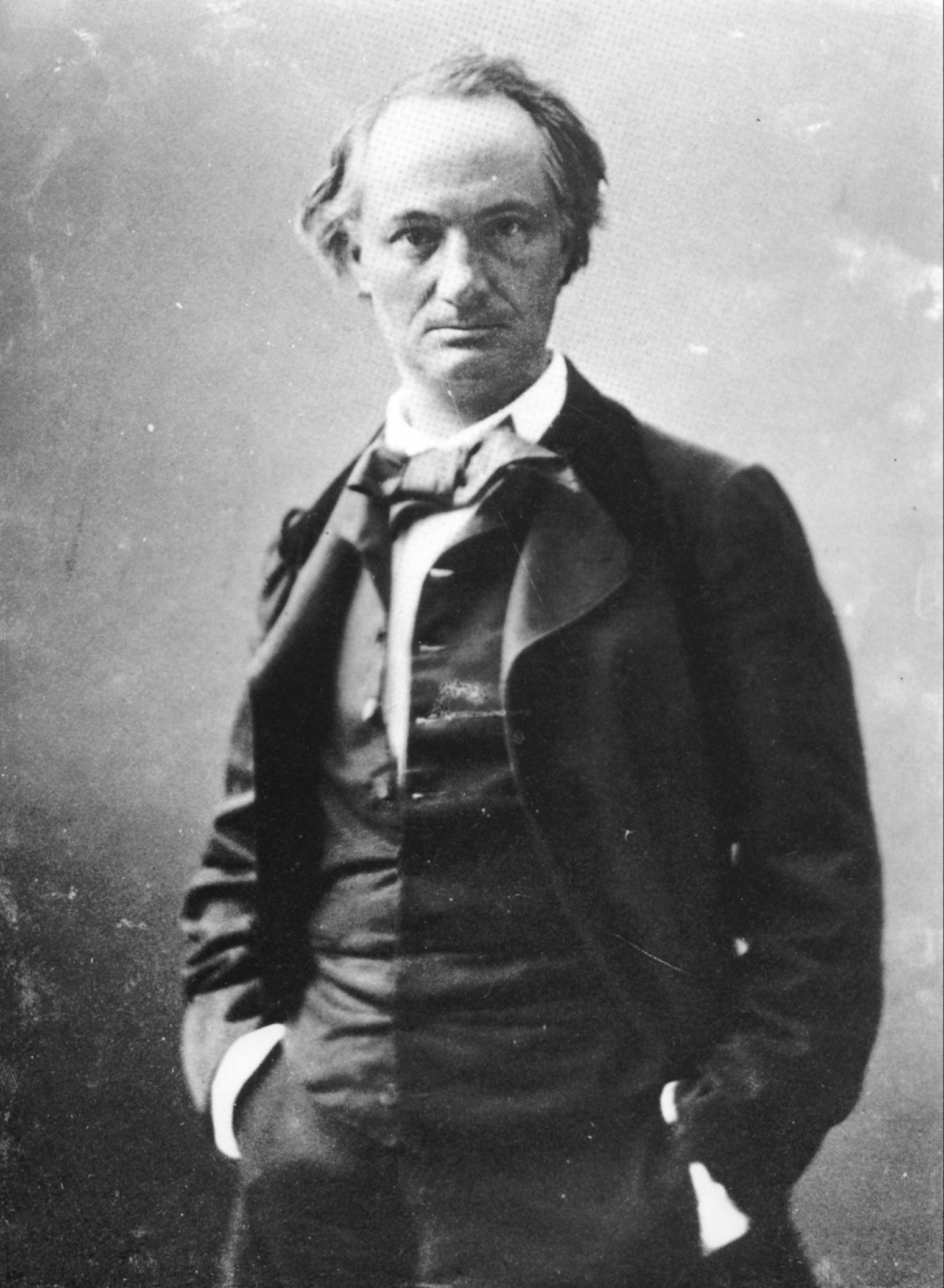
Task 4: Research Baudelaire
 a.) During which years was he alive?
Charles Baudelaire was born on the 9th of April 1821
In Paris-France, passing away on the 31st August August 1867.
b.) Where did
he live and work
“As a young man, Baudelaire studied law at the Lycée
Louis-le-Grand. Dissatisfied with his choice of profession, he began to drink
daily, hire prostitutes and run up considerable debts. Upon obtaining his
degree in 1839, Baudelaire chose not to pursue law—to his mother’s chagrin—and
turned to a career in literature instead.In 1841, Baudelaire's stepfather sent
him on a voyage to India, in an effort to redirect his stepson's energy. The
themes of the sea, sailing and exotic ports that appeared in Baudelaire's later
poetry were largely inspired by this experience. Upon his return to Paris,
Baudelaire became friends with other authors and artists. He also began a
lifelong relationship with Jeanne Duval. When his parents rejected the
coupling, a troubled Baudelaire attempted suicide. Baudelaire soon began to
publish his writing. His first published work was an 1845 art review, which attracted
immediate attention. Many of his critical opinions, including his championing
of Delacroix, were bold and prophetic. In 1846, Baudelaire wrote his second art
review, establishing himself as an advocate of Romanticism”. (Wikipedia)
c.) How is he unlike his poetic Romantic predecessors ?
Les Fleurs du mal afforded Baudelaire a degree of
notoriety; writers such as Gustave Flaubert and Victor Hugo wrote in praise of
the poems. Flaubert wrote to Baudelaire claiming, “You have found a way to
inject new life into Romanticism. You are unlike anyone else [which is the most
important quality].” Unlike earlier Romantics, Baudelaire looked to the urban
life of Paris for inspiration. He argued that art must create beauty from even
the most depraved or “non-poetic” situations.
d.) How is he
like the Romantic poets?
While describing art as dependent upon the
historical contingencies associated with artistic value, however, Baudelaire
also agrees with earlier strands of Romanticism that the artist is the gifted
creator of a timeless and abstract ideal.
Baudelaire confronts the same problem as Wordsworth:
by what standards can we judge an aesthetic object as eternal when we,
ourselves, are only human; when the artist who created it, though perhaps more
talented than ordinary human beings, is just as fallible and mortal as the rest
of us?
 e.) What is
his most famous poetry collection called and when it was published?
e.) What is
his most famous poetry collection called and when it was published?
He is most known for his scandalous work of poetry,
Les Fleurs du Mal (Flowers of Evil), (1857), his translations and commentaries
of the work of Edgar Allen Poe and his depiction of the modern artist in Le
Peintre de la Vie Moderne (The Painter of Modern Life), (1863).
f.) What are
the themes of this collection which has been called both 'putried' (by Habas)
and 'unyielding as marble' (by Flaubert)?
The
Flowers of Evil is organized in six sections, which group the poems by
themes—"Spleen and Ideal," "Parisian Scenes,"
"Wine," "Flowers of Evil," "Revolt," and
"Death." In his journal, Baudelaire once wrote: "There are in
every man at all times two simultaneous impulses — one toward God, the other
toward Satan." This contest between two impulses underlies many of the
themes in The Flowers of Evil. To some critics, this contest is a classic
Christian struggle between good and evil. To others, the poet's fascination
with sin and redemption is more closely related to his perception of a conflict
between the ideal and the actual. For Baudelaire, the goal of art was to find
redemption through beauty from the unpleasant aspects of human existence. Many
critics believe the struggles that underlie The Flowers of Evil have less to do
with religion than with the triumphs and defeats of the creative process. Baudelaire's
moral, psychological, and spiritual conflicts are particularly evident in the
three cycles of love poems included in The Flowers of Evil. He wrote poetry for
three different mistresses, traditionally identified as Apollonie Sabatier
("White Venus"), Jeanne Duval ("Black Venus"), and Marie
Daubrun ("Green Venus"). Sabatier is treated reverently, in almost
celestial terms, in poems that contrast with darker pieces about the other
women. The latter works are more sexually explicit, and they contain elements
of sadism. Collectively, the love poems provide an important and, to some,
frightening commentary on Baudelaire's conflicting feelings about women, whom
he appears to have alternately worshiped and loathed. Camille Paglia argues
that Baudelaire demonstrates an aversion to women's sexuality—particularly
their fertility.
g.) Find out
two more interesting facts about Baudelaire.
Baudelaire did
actually attempt suicide before not long before his stepfather's death in 1857.
Charles also took part in the 1848 Revolutions writing a revolutionary
newspaper.
Task 5: Research Marquis de Sade
a.) What books did he write?
Sade's fiction has been tagged under many different
titles, including pornography, Gothic, and baroque. Sade’s most famous books
are often classified not as Gothic but as libertine novels, and include the
novels Justine, or the Misfortunes of Virtue; Juliette; The 120 Days of Sodom;
and Philosophy in the Bedroom.
b.) What were his views on sexual preference?
Sade was very famous for his libertine sexuality. A libertine is one devoid of most moral restraints,
which are seen as unnecessary or undesirable, especially one who ignores or
even spurns accepted morals and forms of behaviour sanctified by the larger
society. Libertines put value on physical pleasures, meaning those experienced
through the senses.The first major scandal for Sade was on Easter
Sunday in 1768, in which Sade procured the sexual services of a woman, Rose
Keller;whether she was a prostitute or not is widely disputed. He was accused
of taking her to his chateau at Arcueil,imprisoning her there and sexually and
physically abusing her. She escaped by climbing out of a second-floor window
and running away.
Sade later hid at Lacoste,where he re-joined his
wife, who became an accomplice in his subsequent endeavours. He kept a group of
young employees at Lacoste,most of who complained about sexual mistreatment
and quickly left his service. Sade began a sexual relationship with 14-year-old
Madeleine LeClerc.This affair lasted some 4 years, until his death in 1814. Numerous
writers and artists, especially those concerned with sexuality, have been both
repelled and fascinated by Sade. The eponym of the psychological and
subcultural term sadism, his name is used variously to evoke sexual violence,
licentiousness and freedom of speech. In modern culture his works are
simultaneously viewed as masterful analyses of how power and economics work,
and as erotica. De Sade's sexually explicit works were a medium for the
articulation of the corrupt and hypocritical values of the elite in his
society, which caused him to become imprisoned.
These works challenge perceptions of sexuality,
religion, law, age, and gender in ways that Sade would argue are incompatible
with the supernatural. The issues of sexual violence, sadomasochism, and paedophilia
stunned even those contemporaries of Sade who were quite familiar with the dark
themes of the Gothic novel during its popularity in the late 18th century.
Suffering is the primary rule, as in these novels one must often decide between
sympathizing with the torturer or the victim. While these works focus on the
dark side of human nature, the magic and phantasmagoria that dominates the
Gothic is noticeably absent and is the primary reason these works are not considered
to fit the genre.
Task 6: The Bloody Chamber Inter-textual
References
a.) Bluebeard
- The Myth
Bluebeard is the villain in a European folktale made
famous by Charles Perrault in his tale Barbe bleue. According to the story,
Bluebeard married several women, one after the other, and murdered each of
them. He threw their bodies in a special room inside his castle. He married yet
again and gave his new bride the keys to the castle, telling her that she might
go anywhere in the castle except for that one room. While Bluebeard was away,
however, his young wife's curiosity got the better of her and she opened the
door to the forbidden room. There she discovered the remains of Bluebeard's
previous wives. When Bluebeard returned, he realized that his wife had found
out his secret and told her that she must prepare to die.
The story has several different endings. In one
version, the young wife killed Bluebeard with his own sword. The feminist critique of fairy tale may be carried out most powerfully by women writers retelling the tale they know.
b.) Perrault's
original tale of Bluebeard
 In another ending , her brothers came to her rescue and killed him. The theme of the story of Bluebeard—the penalty for being too curious—appears in the folktales of many countries.
The Bloody Chamber is based on the fairy-tale
Bluebeard. Through doing this Cater recognizes the power of fairy-tales. She
provides a modern adjustment to these as a yaw of emphasising themes. The
changes she include are; a female narrator and a female saviour. Carter intended
to highlight the strong relationship between mother and daughter.
c.) Mark of Cain
I first came across the Mark of Cain when watching television series 'Supernatural' during season 9 one of the two protagonists 'Dean Winchester' has the mark of Cain transferred onto his arm by Cain son of Adam and Eve and murderer of brother Abel. Obviously this also comes from the bible Old Testament not Supernatural! But the Mark of Cain in Supernatural triggers Dean to possess strong rage in order to kill Metatron (an archangel who in the plot attempts to take over Heaven in a corrupt fashion) Later on Dean turns into a demon as a result of the mark a demonstration of what evil it may symbolize... However the Old Testament story is as follows:

After history's first murder, God put a curse on
Cain: "When you till the ground, it shall no longer yield its strength to
you. A fugitive and a vagabond you shall be on the earth" (Genesis:4:12).
Cain, instead of thanking God for not taking his life, complained that this
punishment was "greater than I can bear!...[A]nd it will happen that
anyone who finds me will kill me" (Genesis:4:13-14). God in His mercy responded by placing a mark on
Cain "lest anyone finding him should kill him" (Genesis:4:15). Speculations abound about this mark, ranging from
the practical to the absurd. Among the practical suggestions is the idea that
God gave Cain a distinguishing characteristic that would warn people not to
harm him. Others believe that the "mark" was a sign to Cain alone of
a promise of God's protection and not a warning to others at all. The Hebrew word for "mark" is 'owth. Both
meanings are possible—a warning to anyone who would harm Cain, as well as a
banner or sign from God to Cain. The Bible does not clearly distinguish how we
are to understand 'owth in this context. It is clear that God did not exact the
death penalty that Cain deserved for murdering his brother Abel. However, the
Bible does not say when or how Cain died. Some believe that the wording of Genesis:4:23-24 implies that
Lamech eventually murdered him. If that is true, whatever the mark of Cain was,
God removed His protection. Perhaps He limited it to keeping someone from
murdering Cain in revenge for the murder of Abel—but did not prevent anyone
from killing him for some other reason.
In the Bloody Chamber The mark left on the narrator’s head represents the
mark of Cain. This is a Biblical reference to the mark of the first murder as
an outcast. Transfers the stain from the key to her forehead for
her to be marked by forever - "like the caste mark of brahim woman. Or the
mark of Cain". It remains a reminder of her shame, perhaps not so
much for seeking knowledge, but for surrendering her innocence and being
debased by the marquis. The crime for her trespassing is death by beheading,
and the marquis gives her time to say her prayers before he decapitates her
with his own ceremonial great sword.The mark of Cain at the end-her shame/a reminder
that it is all to easy for women to allow themselves to be subjugated by men
and male attitudes and society in general. She wears it as a badge to remind
herself of what she almost lost.
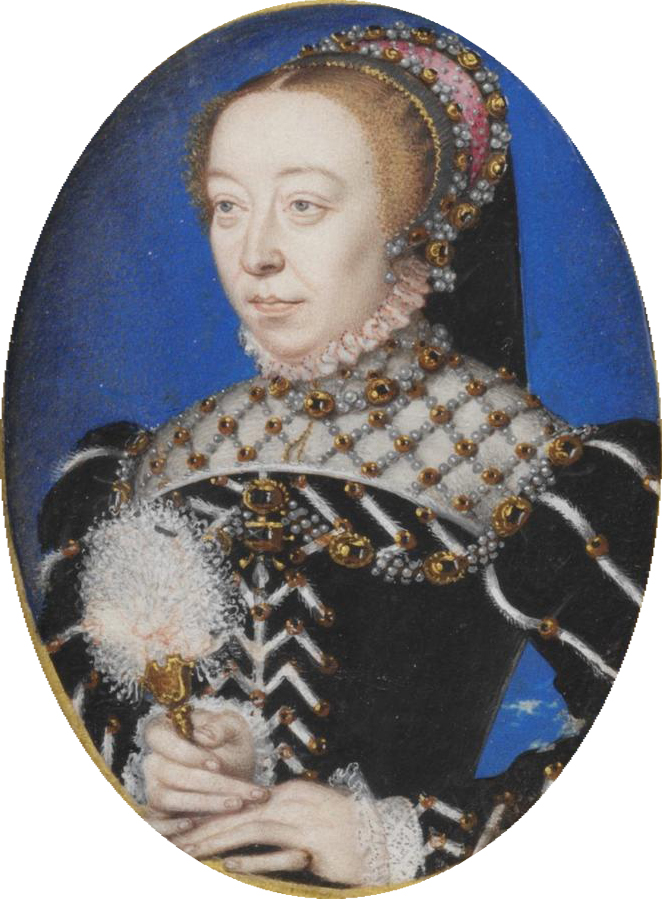
d.) Catherine De Medici
Italian-born French queen, regent and mother of
three kings of France. She was a powerful influence in 16th century France,
particularly during the Wars of Religion. He shares with her his mansion, all
the money, and jewels but she takes his name, belongs to his religion, his
class, his circle, his family. She wears the expensive ring of his family:
"but this opal has been his own mother´s ring, and his grandmother´s and
his mother´s before that, given to an ancestor by Catherine de Medici"
(pg.9).
e.) Croesus
 Croesus was the king of Lydia from 560 to 547 BC
until his defeat by the Persians.Angela Carter says he is as wealthy as Croesus,
which is synonym for a wealthy man. And Croesus, the ancient Greek king of
Lydia – 560 to 547 BC – is credited for issuing the first true gold coins.The heroine describes the Marquis as “rich as
Croesus.” The night before their wedding he had taken her (coincidentally) to
see Tristan, and everyone in the crowd admired the heroine for being with him.
Croesus was the king of Lydia from 560 to 547 BC
until his defeat by the Persians.Angela Carter says he is as wealthy as Croesus,
which is synonym for a wealthy man. And Croesus, the ancient Greek king of
Lydia – 560 to 547 BC – is credited for issuing the first true gold coins.The heroine describes the Marquis as “rich as
Croesus.” The night before their wedding he had taken her (coincidentally) to
see Tristan, and everyone in the crowd admired the heroine for being with him.
f.) Tristan
and Isolde (opera)
Tristan and Isolde “fall in love under the sign of
death… and they live their stage lives obsessed with death as much as with
love” (Hutcheon 270). Wagner develops an interconnection between the two
concepts that deeply penetrates the essence of the play, having two lovers find
unification in both death and romance. Carter, in “The Bloody Chamber,” seeks
to endorse the opposite, urging women to not die for love, to avoid the
affection of men. Moreover, she seeks for women to alienate themselves entirely
from male dependence, and she elucidates her point by employing the arts as a
vehicle of her beliefs. By doing so, Carter seeks to add her own comment within
the feminist movement, attempting to reduce male power in a patriarchal
society.
Carter uses the opera Tristan Und Isolde recurrently
throughout “The Bloody Chamber” to act as a foil and basis of contrast for the
narrator’s development. Tristan is a story of love and infidelity: the princess
Isolde is to be married to King Marke, but instead falls in love with his
knight Tristan. When conflict arises, Tristan ends up dying in Isolde’s arms,
and appears transfigured upon his dead body.
In “The Bloody Chamber,” the Marquis’ first wife, the “diva,” was an
actress who played Isolde. She wanted to die for love of her husband, as Isolde
did. In her love letters to the Marquis, “the diva had sent him a page of the
score of Tristan, the Liebestod, with the single, cryptic word: ‘Until…’
scrawled across it” (Carter 25). The Liebestod, being the final aria of the
opera, translates from German as “love death,” and coincides with Tristan’s
death; Isolde sings over his dead body before lying down herself. The diva’s
“Until…” can be extrapolated to mean “Until death,” as she seeks death to
consummate her love, as Isolde’s sought with Tristan. Her murder is mutually
consented to, and this is confirmed by the manner of her dead body: “The opera
singer lay, quite naked, under a thin sheet of very rare and precious linen… On
her throat I could see the blue imprint of his strangler’s fingers… The worst
thing was, the dead lips smiled” (Carter 29). Her smile suggests her execution
was welcome. She, as a woman, completely devoted herself to her man, so much so
that she offered her life to effectuate her love. The fact that neither Isolde
nor Tristan murdered one another does not affect the connection between the
woman’s death in “The Bloody Chamber” and the opera: they both advocate love
through sacrifice. Renowned author and philosopher Roger Scruton remarks. Liebestod: A musical love theme from the opera,
Tristan and Isolde.
g.) Felicien
Rops (artist) : The artists are chosen carefully, Rops images often
concern sex, death or the satanic. Gaugin painted Polynesian girls and was
alledged to have sexual trysts with very young natives. . Huysmans book Las Bas
is found on a lectern in the library. One of the most visually striking depictions of the
Marquis enacting his “porn” is his recreation of a Felicien Rops piece. As he
undressed her, she describes


Carter describes a theme common in Rops’s etchings,
a naked woman examined by a suited man. While the exact piece cannot be identified,
it is certainly similar to many of his graphic pieces, see Qui aime bien châtie
bien as an example. The piece described and that Rops depicts are
sexually invasive, degrading, and sexist. Men are the clothed and civilized
while women remain the object of attention or action while nude and weak. In
fact, the image is so repeated in his work, by many types of men. He has a
fashion designer , a masseuse , a soldier ; all
examining a naked woman. The repeated image by so many men would seem to imply
this idea as a consistent truth for all varieties of men. By vividly describing
the girl’s objectification, using explicit imagery such as a man who “examined
her limb by limb,” Carter using Rops’s artwork to draw attention to the
inequality between men and women, and how men seem to universally operate
women, rendering them powerless. To greater illustrate the savagery with which
she seeks to depict men; she even invents artwork more violent and brutal then
Rops ever actually created:
“And
when nothing but my scarlet, palpitating core remained, I saw, in the
mirror, the living image of an etching by Rops from the collection he had
shown me when our engagement permitted us to be alone together… the child
with her stick-like limbs, naked… and the
old, monocle lecher who examined her limb by limb. He in his London
tailoring; she, bare as a lamb chop” (Carter 11-12).
“When
[the Marquis] showed me the Rops, newly bought, dearly prized, had he not
hinted that he was a connoisseur of such things? Yet I had not bargained
for this, the girl with tears hanging on her cheeks like stuck pearls, her
cunt a split fig below the great globes of her buttocks on which the
knotted tails of the cat were about to descend, while a man in a black
mask fingered with his free hand his prick, that curved upwards like the
scimitar he held” (Carter 13). Carter remarks how it resembles one of
the pornographic etchings of the Belgian artist Felicien Rops, and after
the stripping, which was only to whet his appetite; the protagonist finds
his collection of bondage art hidden in his office.
h.) Huysmans
La-Bas (novel)
QUOTE FROM TBC:
"A
lectern, carved like a spread eagle, that held open upon it an edition of
Huysmans's Là-bas, from some over-exquisite private press; it had been
bound like a missal, in brass, with gems of coloured glass."
(Taken from the moment the narrator is in the Marquis' library. )
Grand guignol:
QUOTE FROM TBC:
"But
the strangest of all these love letters was a postcard with a view of a
village graveyard, among mountains, where some black-coated ghoul
enthusiastically dug at a grave; this little scene, executed with the
lurid exuberance of Grand Guignol, was captioned: 'Typical Transylvanian
Scene--Midnight, All Hallows.' And, on the other side, the message: 'On
the occasion of this marriage to the descendant of Dracula--always remember,
"the supreme and unique pleasure of love is the certainty that one is
doing evil". Toutes amitiés, C."
A play established
in Pigalle in 1897 - in an abandoned church, no less - it specialised in
amoral, highly naturalistic horror shows.
This evolved out of some Elizabethan and Jacobean theatre, Titus
Andronicus being a famous example. Its
founder was Oscar Méténier, a writer and director, who wanted to produce plays
exploring the darkest themes and characters of society. This developed into horror by the early 20th
Century. Up to six plays would be shown in one sitting; in a small, 293-seat
theatre, the effects of such onstage gore were legendary. Audience members frequently fainted, and comedies
were often included in the repertoire to provide some relief. The
theatre closed in 1962. Its gradual
decline in attendance has been blamed on the emotional and psychological
effects of World War Two. As its last director,
Charles Nonon said, "Before the war, everyone felt that what was happening
onstage was impossible. Now we know that
these things, and worse, are possible in reality".
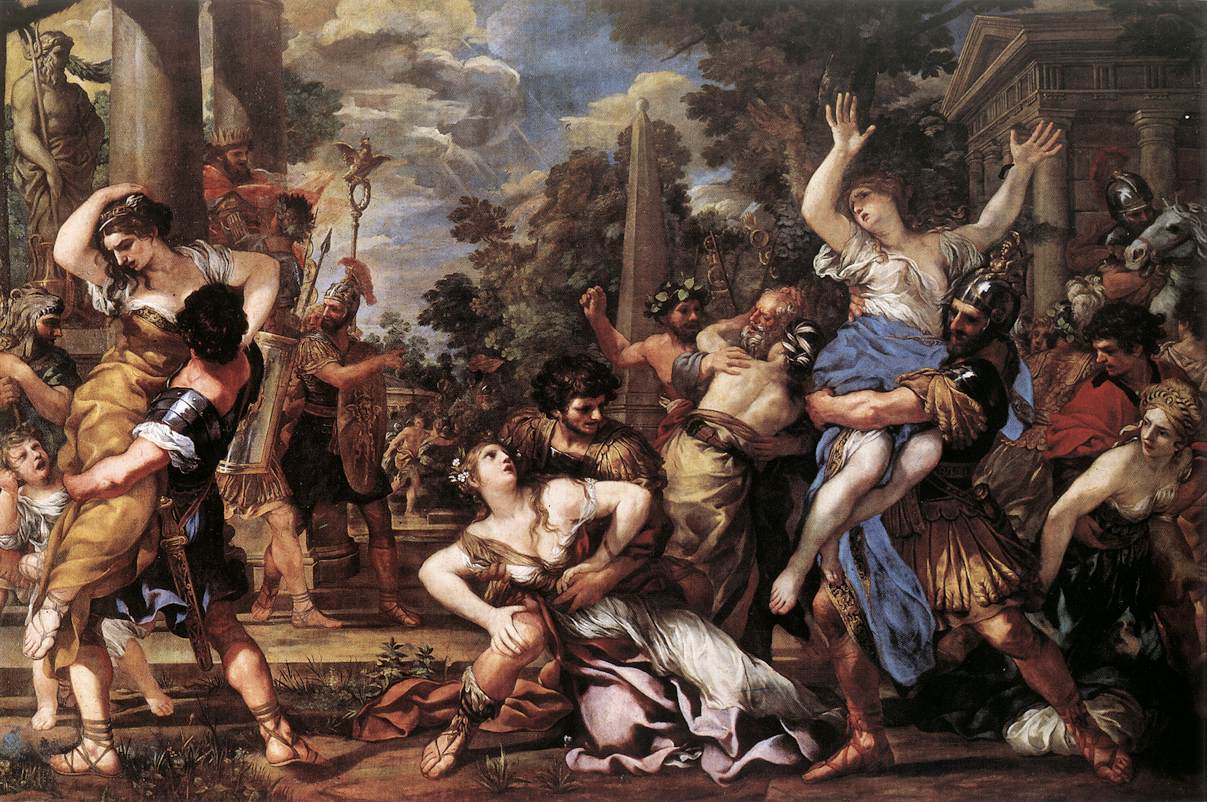
i.) Rape of
the Sabines
QUOTE FROM TBC:
"The
flame picked out, here, the head of a man, there, the rich breast of a
woman spilling through a rent in her dress--the Rape of the Sabines,
perhaps? The naked swords and immolated horses suggested some grisly
mythological subject. The corridor wound downwards; there was an almost
imperceptible ramp to the thickly carpeted floor. The heavy hangings on
the wall muffled my footsteps, even my breathing. For some reason, it grew
very warm; the sweat sprang out in beads on my brow. I could no longer
hear the sound of the sea".
 The Story: The Rape of the Sabine Women is an event described
in Classical legend, when the first generation of Roman men 'acquired' wives
from the nearby Sabine tribe. Although
the word 'rape' is said to mean 'abduction' in this sense, the notion of forced
marriage surely by its very nature denotes sexual violation. Livy disputed this; when he described the
event he said that the women were guaranteed civic and property rights. Outrage at the abduction nonetheless resulted
in war against the Romans and their leader, Romulus. When the Sabines gained a foothold into Rome
during battle it was their women who intervened to stop the bloodshed and force
reconciliation. Following this, one
nation was formed. Many artists
throughout the centuries have found inspiration in these brave muses, including
the painters Rubens, Poussin and Picasso, and the sculptor Giambologna.
The Story: The Rape of the Sabine Women is an event described
in Classical legend, when the first generation of Roman men 'acquired' wives
from the nearby Sabine tribe. Although
the word 'rape' is said to mean 'abduction' in this sense, the notion of forced
marriage surely by its very nature denotes sexual violation. Livy disputed this; when he described the
event he said that the women were guaranteed civic and property rights. Outrage at the abduction nonetheless resulted
in war against the Romans and their leader, Romulus. When the Sabines gained a foothold into Rome
during battle it was their women who intervened to stop the bloodshed and force
reconciliation. Following this, one
nation was formed. Many artists
throughout the centuries have found inspiration in these brave muses, including
the painters Rubens, Poussin and Picasso, and the sculptor Giambologna.
j.) St.Cecilia QUOTES FROM TBC:
"There
was a Bechstein for me in the music room and, on the wall, another wedding
present--an early Flemish primitive of Saint Cecilia at her celestial
organ"
"I
looked at the picture of Saint Cecilia with a faint dread; what had been
the nature of her martyrdom?"
"Shall
I come up to heaven to fetch you down, Saint Cecilia? You wicked woman, do
you wish me to compound my crimes by desecrating the marriage bed?"
Famous
elements of her story include her instructions that her home be kept as a church,
as she left to go and face her death.
Attempts by officials to execute Cecilia all subsequently failed; they
attempted to decapitate her three times.
She was severely wounded, and survived for another three days before
passing away. The decapitation is an
obvious link and foreshadowing to the methods of the Marquis’ planned murder of
our narrator.
k.) Pandora's Box QUOTES FROM TBC:
 "The
Secret of Pandora's Box, and yawned. Nothing, here, to detain a
seventeen-year-old girl waiting for her first embrace. I should have
liked, best of all, a novel in yellow paper; I wanted to curl up on the
rug before the blazing fire, lose myself in a cheap novel, munch sticky
liqueur chocolates. If I rang for them, a maid would bring me
chocolates."
"The
Secret of Pandora's Box, and yawned. Nothing, here, to detain a
seventeen-year-old girl waiting for her first embrace. I should have
liked, best of all, a novel in yellow paper; I wanted to curl up on the
rug before the blazing fire, lose myself in a cheap novel, munch sticky
liqueur chocolates. If I rang for them, a maid would bring me
chocolates."
"The
secret of Pandora's box; but he had given me the box, himself, knowing I
must learn the secret. I had played a game in which every move was
governed by a destiny as oppressive and omnipotent as himself, since that
destiny was himself; and I had lost. Lost at that charade of innocence and
vice in which he had engaged me. Lost, as the victim loses to the
executioner."
Taken
from Masaryk University- Jana Mártonová
“Another
secret area present in this story is the count’s library, which is to some
extend a forerunner of the already mentioned “bloody” chamber. The library offers
an insight into count’s enigmatic nature. It is equipped with numerous rows of
calf-bound books, among which the main heroine finds, as if by coincidence,
volumes such as The Initiation, The Key of Mysteries, The Secret of Pandora’s
Box. The Secret of Pandora’s Box is then linked to the process of entering and exploring
the “bloody” chamber which was forbidden – such as the opening of the Pandora’s
Box originally was. Mary Kaiser actually says, that “the rooms of the whole
castle are deliberately planned as stages for symbolic action”[2] – gradual
opening of The Pandora’s Box. Realizing that she is gradually collecting
information about her husband makes the nameless heroine wanting to know more
and her curiosity makes her go to the forbidden chamber. The “bloody” chamber
itself is forbidden to the main heroine with the explanation that it is “only a
study, a hideaway, a den … where (the count) can go on those infrequent yet
inevitable occasions when the yoke of marriage seems to weigh too heavily on my
(the count’s) shoulders”. (BC, 21) It is the already mentioned Pandora’s Box, a
room “designed to desecration, … a torture chamber, … a little museum of
perversity” (28), a “private slaughterhouse” (30), the “kingdom of the unimaginable”
(36) the heroine was not supposed to enter, yet it was predestined for her to
open it, in order to learn the truth about her husband and, perhaps, to change
herself. The chamber with walls of naked rock contained many instruments of
mutilation, such as a great wheel and the rack, and also funerary urns, one at
each corner of the chamber, and remains of the count’s last three wives
“displayed as grandly as if they were items of statuary“ (28). Seeing all this
made her realize that she is supposed to become another exhibit in her husband’s
collection. She reveals the secret of Pandora’s Box.”
Just
like Eve and Pandora’s drive to discover forbidden knowledge, our heroine faces
a similar circumstance as she is tempted by this apple/box/key to discover the
true nature of her master closeness with God? This has the connection to the
Garden of Eden that it is the women that cause the problems because they are
the ones that transgress.
l.) Poiret QUOTES FROM TBC:
"And
I had on a Poiret dress. He had prevailed upon my reluctant mother to let
him buy my trousseau; what would I have gone to him in, otherwise?
Twice-darned underwear, faded gingham, serge skirts, hand-me-downs. So,
for the opera, I wore a sinuous shift of white muslin tied with a silk
string under the breasts. And everyone stared at me. And at his wedding
gift".
"This
ring, the bloody bandage of rubies, the wardrobe of clothes from Poiret
and Worth, his scent of Russian leather--all had conspired to seduce me so
utterly that I could not say I felt one single twinge of regret for the
world of tar-tines and maman that now receded from me as if drawn away on
a string, like a child's toy..."
"He
had made me change into that chaste little Poiret shift of white muslin;
he seemed especially fond of it, my breasts showed through the flimsy
stuff, he said, like little soft white doves that sleep, each one, with a
pink eye open. But he would not let me take off my ruby choker, although
it was growing very uncomfortable, nor fasten up my descending hair, the
sign of a virginity so recently ruptured that still remained a wounded
presence between us".
"She
made a moue of disdain when I laughed to hear that, she was far more the
lady than I. But, imagine--to dress up in one of my Poiret
extravaganzas..."
Task 7: Terminology
Aesthete:
a person who is appreciative of and sensitive to art and beauty.
Aigrette: a headdress consisting of a white egret's
feather or other decoration such as a spray of gems.
Avarice: extreme greed for wealth or material gain.
Baroque: relating to or denoting
a style of European architecture, music, and art of the 17th and 18th centuries
that followed Mannerism and is characterized by ornate detail. In architecture
the period is exemplified by the palace of Versailles and by the work of Wren
in England. Major composers include Vivaldi, Bach, and Handel; Caravaggio and
Rubens are important baroque artists.
Bier : a movable frame on
which a coffin or a corpse is placed before burial or cremation or on which
they are carried to the grave.
Billets-doux: a love letter.
Carillon : a set of bells played
using a keyboard or by an automatic mechanism similar to a piano roll.
Carnal: relating to physical, especially sexual, needs
and activities.
Catafalque : a decorated wooden
framework supporting the coffin of a distinguished person during a funeral or
while lying in state.
Chthonic : relating to or
inhabiting the underworld.
Dolorous : feeling or expressing
great sorrow or distress.
Eldritch : weird and sinister or
ghostly.
Enfer : French for Hell
Gourmand: a person who enjoys
eating and often eats too much or a connoisseur (an expert judge in matters of
taste) of good food; a gourmet.
Immolated: kill or offer as a
sacrifice, especially by burning.
Importunate : persistent, especially
to the point of annoyance.
Interdiction : a military term for the
act of delaying, disrupting, or destroying enemy forces or supplies en route to
the battle area.
Jinn: (in Arabian and Muslim
mythology) an intelligent spirit of lower rank than the angels, able to appear
in human and animal forms and to possess humans.
Lisle: a fine, smooth cotton
thread used especially for stockings.
Loge: a private box or
enclosure in a theatre.
Loquacity: the quality of talking
a great deal; talkativeness.
Lustratory :
Missal : a book containing the
texts used in the Catholic Mass throughout the year.
Nacreous : consisting of or
resembling mother-of-pearl
Parure : a set of jewels
intended to be worn together.
Rictus : a fixed grimace or
grin.
Sacerdotal :relating to or denoting
a doctrine which ascribes sacrificial functions and spiritual or supernatural
powers to ordained priests.
Sadomasochistic : the derivation of
pleasure from the infliction of physical or mental pain either on others or on
oneself
Sardonic: grimly mocking or
cynical.
Trousseau: the clothes, linen, and
other belongings collected by a bride for her marriage.
Vellum : fine parchment made
originally from the skin of a calf.
Vicuna : a wild relative of the
llama, inhabiting mountainous regions of South America and valued for its fine
silky wool.- cloth made from the wool of the vicuña or an imitation of it.
Viscera : the internal organs in
the main cavities of the body, especially those in the abdomen, e.g. the
intestines.
Voluptuary : devotion to luxury and
sensual pleasure.
I understand that a florid prose is the use of intricate or elaborate language in its ordinary form without a particular metrical structure. I don't have a particular opinion on it however...
Having found another student's work I particularly liked their view of florid prose;